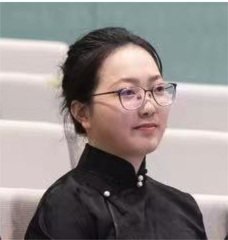
Welcome to Wen Zhou’s Homepage
I am a Postdoctoral Research Associate at the University of Illinois Urbana-Champaign, Department of Geography and GIS. I completed my Ph.D. in Remote Sensing and Earth Observation, where I developed innovative approaches for urban livability assessment and building functional analysis using multi-modal deep learning methods.
My research primarily focuses on GIS, GeoAI, especially multi-modal spatiotemporal data fusion, and their methodological and applied studies, addressing challenges related to urban resilience, environments, and sustainable development goals.
Education
- Ph.D. in Remote Sensing and Earth Observation, University of Twente (2024)
- M.Sc. in Geoinformatics, China University of Geosciences (Beijing) (2019)
- B.Sc. in Geographic Information Science, China University of Geosciences (Beijing) (2016)
Research Interests
My research focuses on the intersection of urban geography, GeoAI, and geospatial data analysis. I am particularly interested in:
- Flash Flood prediction: Predicting flood depth based on multiple geospatial data using GeoAI.
- Urban Livability Assessment: Developing comprehensive frameworks to evaluate and measure urban quality of life using multiple data sources
- Building Functional Analysis: Extracting and analyzing building use patterns from various geospatial datasets
- Deep Learning Applications: Applying multi-modal deep learning techniques to urban research problems
- Geospatial Data Integration: Combining remote sensing, GIS, and other spatial data for urban analysis
- Mixed-Use Building Classification: Advanced methods for identifying and classifying complex urban building functions
Recent News
[2026.03] I had the opportunity to give a tutorial at the AAG Annual Meeting workshop WS 4-4: Introduction to the I-GUIDE Platform: A Hands-on Exploration My tutorial focused on how the I-GUIDE Platform, especially its Notebook Elements, can support both research and education. The I-GUIDE Platform is designed to enable geospatial data-intensive convergence research and education by providing a scalable and easy-access user environment for knowledge sharing and discovery. Its tools and resources support collaboration among researchers, educators, and learners.
[2026.03] I was honored to be invited as a panelist for the AAG Annual Meeting session Convergent GeoAI and Cyberinfrastructure for Ethical, Sustainable, and Human-Environment Resilience Centered on the guiding question—“How do we build systems that are not only scalable and high-performing, but also transparent, reliable, and aligned with real-world decision-making?”—the panel offered a valuable space for thoughtful exchange. It was a pleasure to discuss these critical topics with Dr. Xiao Huang, Dr. Alexander Michels, and Dr. Fangzheng Lyu. Our conversation explored the future of GeoAI, its ethical and sustainable applications, and the challenges of designing trustworthy systems to support human–environment resilience.
[2026.03] Hosted the session of AAG 2026 Symposium on Spatial AI and Data Science: Frontiers and Applications: GeoAI for Multi-source Geospatial Data Fusion and Analysis. This session aims to advance the application of GeoAI for multi-source data processing. We seek to explore methods that address the distinctive characteristics of various data types and offer practical solutions for their analysis. We invite researchers to share their work, showcasing innovative approaches to multi-source data integration and analysis. Additionally, we aim to engage potential new users interested in these methodologies, fostering deeper multidisciplinary interactions on this topic.
[2026.03] Presenting my work [A Multimodal Dataset and Geospatial Deep Learning Framework for Predicting Flood Peaks] on the session of AAG 2026 Symposium on Spatial AI and Data Science: Frontiers and Applications: Big Data Computing for Geospatial Applications (2).
For more detailed news and updates, please visit the News page.
Selected Publications
[2024] Zhou W, Persello C, Stein A. Hierarchical building use classification from multiple modalities with a multi-label multimodal transformer network[J]. International Journal of Applied Earth Observation and Geoinformation, 2024, 132: 104038.
[2023] Zhou W, Persello C, Li M, Stein A. Building use and mixed-use classification with a transformer-based network fusing satellite images and geospatial textual information[J]. Remote Sensing of Environment, 2023, 297: 113767.
[2020] Zhou W, Ming D, Lv X, et al. SO–CNN based urban functional zone fine division with VHR remote sensing image[J]. Remote Sensing of Environment, 2020, 236: 111458.
For more detailed news and updates, please visit the Publications page.
Awards
- HDR NextGen Leaders Fellowship (2025)
- Excellent Master’s Degree Thesis Award of China University of Geoscience (Beijing) (2019)
- Excellent Graduates Award of Beijing (2019)
- Excellent research achievement award of CUGB (2018)